
Somewhere along the way, “20% down” became the number everyone assumes they need before even thinking about buying a house. It’s the figure that scares off a lot of would-be buyers in Massachusetts before they’ve even talked to a lender. But here’s the thing that 20% rule isn’t nearly as universal as most people believe, and understanding your real options around down payment for first home purchases could change your entire timeline for getting into a house.
Let’s actually break this down, because the numbers are more flexible than most people realize.
Where the 20% Myth Even Came From
The 20% figure originally tied back to avoiding Private Mortgage Insurance (PMI) on conventional loans. If you put down less than 20%, lenders typically require PMI to protect themselves in case you default an extra monthly cost tacked onto your mortgage payment.
But needing 20% to buy a home at all? That’s simply not accurate for most buyers today.
A couple in Worcester, Massachusetts recently purchased their first home with just 5% down through a conventional loan. Yes, they pay PMI monthly, but they got into their house nearly three years earlier than if they’d waited to save a full 20%. Given how fast Massachusetts home prices have climbed in recent years, that timing decision arguably saved them more in appreciation than the PMI cost them though that math depends heavily on local market conditions and is worth running with an actual lender before assuming it applies to your situation.
Actual Down Payment Ranges by Loan Type
This is where things get specific, and where first time homebuyer programs really start to matter.
- Conventional Loans Typically require anywhere from 3% to 20% down, depending on credit score and lender requirements.
- FHA Loans Backed by the Federal Housing Administration, these often allow down payments as low as 3.5% for buyers with credit scores at or above 580 (verify current thresholds, since FHA guidelines do get updated periodically).
- Veterans Loans Available through the VA for eligible service members and veterans, frequently requiring 0% down, which is a massive advantage for those who qualify.
- USDA/Rural Loans Designed for eligible rural and some suburban areas, these can also offer 0% down payment options for qualifying properties and income levels.
- Jumbo Loans For homes exceeding conforming loan limits, down payment requirements are usually higher, often starting around 10-20%, since these loans carry more risk for lenders.
A veteran in Springfield, Massachusetts used a Veterans Loan to purchase a home with zero down payment. He mentioned that without that program, saving a traditional down payment would’ve delayed his purchase by several years given local rent and living costs eating into his savings rate.
Massachusetts-Specific Considerations
Massachusetts has its own quirks that affect this conversation. Home prices in areas like Boston, Cambridge, and much of the Greater Boston region run significantly higher than national averages, which means even a “small” down payment percentage can still be a substantial dollar amount.
For example, 5% down on a $500,000 home in Somerville is $25,000 not exactly pocket change, even though it’s far more achievable than a $100,000 down payment at 20%.
This is exactly why first time homebuyer programs matter so much here. Massachusetts offers state-specific assistance programs (like Mass Housing loans) that can help with down payments and closing costs for eligible first-time buyers. Eligibility requirements, income limits, and available funding change periodically, so it’s worth checking directly with Mass Housing or a local housing counselor rather than relying on outdated figures floating around online.
What First Time Homebuyers Actually Qualify For
If you’re a first-time buyer, you likely have access to more flexibility than you’d expect. Many programs define “first-time buyer” as someone who hasn’t owned a home in the past three years not strictly someone who’s never owned property at all.
A woman in Lowell, Massachusetts hadn’t owned a home in over five years due to a period of renting after a relocation. She qualified for first-time buyer assistance despite having owned a home previously, which she said came as a genuine surprise during her mortgage application process.
Programs worth exploring for First Time Homebuyers in Massachusetts often include down payment assistance grants, reduced mortgage insurance requirements, and sometimes forgivable loans tied to staying in the home for a set number of years.
Beyond the Down Payment: Other Loan Options Worth Knowing
While down payment is the main focus here, it helps to understand the broader lending landscape, especially if your situation isn’t entirely straightforward.
Refinancing becomes relevant once you’re a few years into homeownership swapping your existing mortgage for new terms, potentially lowering your rate or adjusting your loan length.
Reverse Mortgages work differently altogether, generally available to homeowners aged 62+, allowing them to convert home equity into cash without monthly mortgage payments, though the loan balance grows over time.
DSCR loans (Debt Service Coverage Ratio) are typically used by real estate investors rather than primary homebuyers, qualifying borrowers based on a property’s rental income potential rather than personal income relevant if you’re eyeing a multi-family property in Massachusetts as an investment alongside your primary residence.
These aren’t directly tied to the down payment conversation for most first-time buyers, but they’re worth knowing exist as your homeownership journey progresses.
Saving Strategies That Actually Work
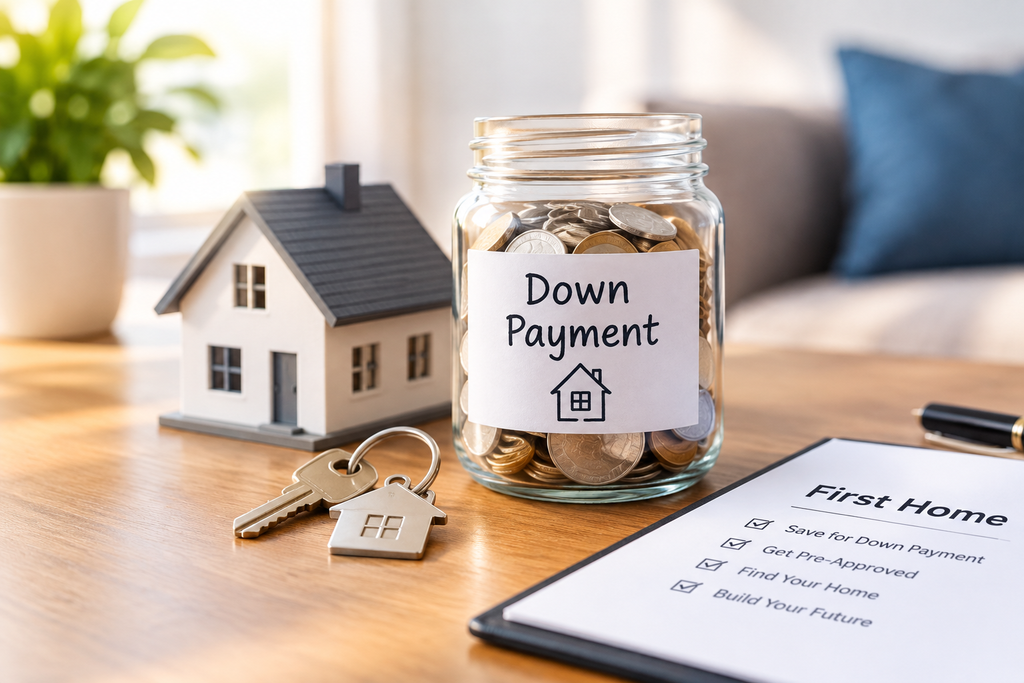
Beyond loan programs, there are practical ways people build up their down payment faster.
- Automating a percentage of each paycheck directly into a separate high-yield savings account.
- Using windfalls tax refunds, bonuses, gifts specifically for the down payment fund rather than general spending.
- Exploring employer-assisted housing programs, which some Massachusetts-based companies offer as part of relocation or retention packages.
- Gift funds from family members, which many loan programs allow toward down payments with proper documentation.
A young professional in Boston combined a modest monthly savings habit with a portion of an annual work bonus over two years, reaching enough for a 10% down payment on a condo in Quincy faster than she initially expected. Her timeline isn’t universal, obviously income, expenses, and local prices vary widely but it illustrates that consistent small contributions add up more than people assume.
Common Mistakes People Make
A few patterns show up repeatedly among first-time buyers:
- Assuming they need 20% down and delaying their purchase unnecessarily for years.
- Not researching state-specific first time homebuyer programs before starting their home search.
- Draining nearly all their savings for the down payment, leaving little cushion for closing costs, moving expenses, or unexpected repairs after move-in.
- Overlooking FHA Loans or Veterans Loans eligibility simply because they assumed conventional financing was their only option.
A first-time buyer in Fall River nearly missed out on an FHA loan option because his real estate agent didn’t initially mention it he found it through his own research and ended up saving thousands on his down payment compared to the conventional route he was originally pursuing.
So, How Much Do You Actually Need?
Realistically, for most first-time buyers in Massachusetts, a down payment somewhere between 3% and 10% is far more common than the mythical 20%. The exact number depends on your loan type, credit profile, and which assistance programs you qualify for.
If you’re eligible for a Veterans Loan or USDA/Rural Loan, your down payment could genuinely be $0. If you’re going the FHA or conventional route, expect somewhere in the 3.5% to 10% range as a realistic target, with state programs potentially covering part of that gap.
Bringing This Together
The idea that homeownership requires a massive upfront lump sum keeps plenty of capable buyers renting far longer than necessary. Once you actually look at FHA Loans, Veterans Loans, USDA/Rural Loans, and Massachusetts-specific first-time buyer assistance, the path to owning a home often looks a lot shorter than the 20%-down narrative suggests. The smartest move isn’t guessing your way through this it’s sitting down with a lender who knows Massachusetts programs specifically and running your actual numbers before deciding your timeline.
FAQs
1. What is the minimum down payment for a first-time homebuyer in Massachusetts?
Depending on loan type, first-time buyers can put down as little as 0% (Veterans Loans, USDA/Rural Loans) or 3-3.5% through conventional and FHA Loans, though eligibility varies by program and lender.
2. Do I really need 20% down to avoid extra costs?
No 20% down primarily helps you avoid Private Mortgage Insurance (PMI) on conventional loans, but it’s not a requirement to purchase a home at all.
3. Are there first-time homebuyer programs specific to Massachusetts?
Yes, Massachusetts offers programs like MassHousing loans that provide down payment and closing cost assistance for eligible first-time buyers, though income limits and requirements should be confirmed directly with the program.
4. Can I use gift money for my down payment?
Many loan programs, including FHA Loans and conventional loans, allow gift funds from family members toward a down payment, provided proper documentation is submitted to the lender.
5. What’s the difference between FHA Loans and Conventional Loans for down payments?
FHA Loans typically allow lower down payments (as low as 3.5%) with more flexible credit requirements, while Conventional Loans may require higher down payments or stricter credit standards but can avoid mortgage insurance once you reach 20% equity.